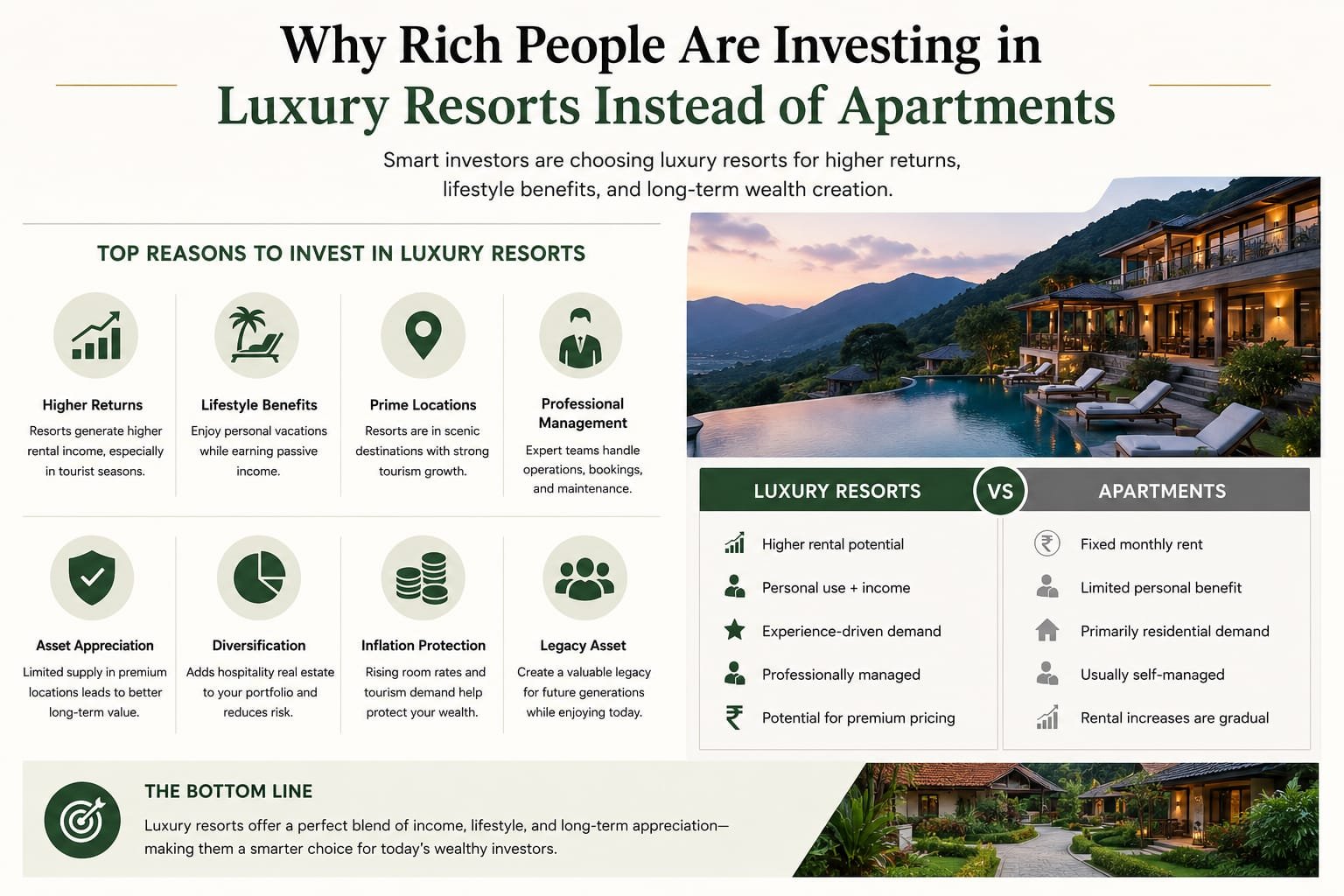
Introduction
India’s hospitality industry has undergone a remarkable transformation over the past few decades. From traditional hotels catering primarily to business travelers and tourists, the sector has evolved into a dynamic investment landscape driven by changing consumer preferences, rapid urbanization, digital innovation, and growing domestic tourism. Today, hospitality investments in India are attracting both domestic and international investors seeking long-term growth opportunities.
The Early Phase: Limited Investment Opportunities
Before economic liberalization in the 1990s, India’s hospitality sector was relatively underdeveloped. Investment opportunities were limited, and the industry was dominated by a few established hotel chains. Growth was slow due to regulatory restrictions, limited foreign participation, and lower travel demand.
However, increasing business activities and rising tourism gradually highlighted the need for more quality accommodation and hospitality infrastructure.
Liberalization and Industry Expansion
The economic reforms introduced in 1991 marked a turning point for the hospitality sector. Foreign direct investment (FDI) policies became more favorable, encouraging global hotel brands to enter the Indian market.
This period witnessed:
- Expansion of luxury and premium hotel segments
- Growth of business hotels in metropolitan cities
- Increased participation of international investors
- Development of hospitality infrastructure near commercial hubs
As India’s economy expanded, demand for quality hospitality services grew significantly.
Rise of Domestic Tourism
One of the most influential factors shaping hospitality investments has been the growth of domestic tourism. Rising disposable incomes, improved transportation networks, and increasing travel aspirations have encouraged millions of Indians to explore destinations across the country.
Investors began focusing on:
- Leisure resorts
- Budget hotels
- Mid-scale hospitality properties
- Destination-based tourism projects
This shift created investment opportunities beyond major metropolitan cities.
The Digital Transformation Era
Technology has revolutionized the hospitality industry. Online booking platforms, digital payments, mobile applications, and customer review systems have transformed how travelers discover and book accommodations.
Hospitality investors now evaluate:
- Digital capabilities of hotel brands
- Revenue management technologies
- Customer experience platforms
- Data-driven operational strategies
The rise of online travel agencies (OTAs) has further enhanced market accessibility and profitability.
Emergence of Alternative Hospitality Assets
Modern investors are no longer limited to traditional hotel investments. New hospitality asset classes have emerged, including:
Serviced Apartments
Popular among long-stay business travelers and expatriates.
Boutique Hotels
Offering personalized experiences and unique local themes.
Wellness Resorts
Focused on health, wellness, and holistic tourism.
Vacation Rentals
Driven by increasing demand for flexible accommodation options.
These segments have diversified investment opportunities within the hospitality ecosystem.
Post-Pandemic Recovery and Growth
The COVID-19 pandemic temporarily disrupted the hospitality industry, but the recovery has been strong. Domestic travel rebounded quickly, and travelers increasingly prioritize safety, comfort, and personalized experiences.
Current investment trends include:
- Sustainable hospitality projects
- Smart hotel technologies
- Luxury experiential travel
- Wellness and eco-tourism developments
- Mixed-use hospitality properties
Investors are now focusing on long-term resilience and operational efficiency.
Government Support and Infrastructure Development
Government initiatives continue to strengthen hospitality investments through:
- Tourism promotion programs
- Infrastructure development projects
- Improved connectivity through airports and highways
- Incentives for tourism-related developments
These efforts are enhancing the attractiveness of hospitality assets across both urban and emerging destinations.
Future Outlook
The future of hospitality investments in India appears highly promising. Factors supporting growth include:
- Expanding middle-class population
- Growing domestic and international tourism
- Digital innovation
- Rising demand for experiential travel
- Increased foreign investment participation
As travel patterns evolve, investors who focus on sustainability, technology, and customer-centric experiences are likely to achieve the greatest success.
Conclusion
The evolution of hospitality investments in India reflects the country’s economic growth, changing consumer behavior, and expanding tourism ecosystem. From traditional hotel developments to innovative hospitality concepts, the sector has become one of the most attractive investment opportunities in the Indian economy. With strong demand fundamentals and continued infrastructure development, India’s hospitality industry is well-positioned for sustained growth in the years ahead.
The evolution of hospitality investments in India reflects the industry’s rapid growth, fueled by increasing tourism, urban development, and changing customer expectations. Modern investors are prioritizing sustainable and experience-focused projects that create long-term value. embodies these trends by combining modern hospitality with nature-inspired design and environmental responsibility. By offering a unique and serene guest experience, the project contributes to the future of sustainable tourism. As the hospitality sector continues to evolve, Urban Arbor represents a strong and promising investment opportunity.
1. What challenges do hospitality investors face in India?
Answer:
Investors face challenges such as high land costs, regulatory approvals, economic fluctuations, competition, and changing customer preferences.
2. How has domestic tourism influenced hospitality investments?
Answer:
The rise in domestic tourism has increased demand for hotels, resorts, and vacation properties, encouraging greater investment across various regions of India.
3. What is the importance of sustainable hospitality investments?
Answer:
Sustainable investments focus on eco-friendly construction, energy efficiency, and responsible tourism, helping reduce environmental impact while attracting modern travelers.