The Growing Demand for Managed Hospitality Experiences in India
Introduction
India’s hospitality industry is undergoing a remarkable transformation. As travelers increasingly seek convenience, consistency, and personalized experiences, managed hospitality has emerged as one of the fastest-growing segments in the market. From luxury villas and serviced apartments to boutique resorts and vacation homes, professionally managed hospitality experiences are redefining how people travel, stay, and invest in hospitality assets.
The rise of domestic tourism, remote work culture, experiential travel, and digital booking platforms has fueled demand for managed hospitality properties across India. Today’s travelers are no longer satisfied with just accommodation—they seek memorable experiences, premium services, and hassle-free stays. This shift has created significant opportunities for hospitality operators, property owners, and investors alike.
Understanding Managed Hospitality
Managed hospitality refers to properties that are professionally operated and maintained by specialized hospitality management companies. Unlike traditional vacation rentals or independently managed properties, these assets offer standardized services, operational excellence, and guest-focused experiences.
Managed hospitality properties typically include:
- Luxury villas
- Vacation homes
- Boutique hotels
- Serviced apartments
- Branded residences
- Nature retreats and resorts
- Corporate stay accommodations
Professional management companies oversee guest services, housekeeping, maintenance, marketing, revenue management, and customer support, ensuring a seamless experience for both guests and property owners.
Factors Driving the Demand for Managed Hospitality Experiences
1. Rise of Experiential Travel
Modern travelers prioritize unique experiences over conventional hotel stays. Whether it’s a beachfront villa in Goa, a mountain retreat in Himachal Pradesh, or a heritage property in Rajasthan, guests are willing to pay a premium for immersive experiences.
Managed hospitality operators curate personalized services, local experiences, wellness programs, and customized itineraries that enhance guest satisfaction and encourage repeat visits.
2. Growth of Domestic Tourism
India has witnessed a significant increase in domestic travel over the last few years. Improved infrastructure, better connectivity, and growing disposable incomes have encouraged people to explore destinations within the country.
Popular destinations such as Goa, Udaipur, Jaipur, Coorg, Rishikesh, Alibaug, and Lonavala have seen strong demand for professionally managed hospitality properties that offer comfort, privacy, and quality service.
3. Increasing Preference for Privacy and Space
The post-pandemic travel landscape has fundamentally changed consumer preferences. Travelers now prioritize private accommodations that offer greater safety, flexibility, and exclusivity.
Managed villas and serviced residences provide:
- Larger living spaces
- Private amenities
- Personalized services
- Family-friendly environments
- Long-stay flexibility
These benefits make managed hospitality assets highly attractive compared to traditional hotel rooms.
4. Digital Transformation of Travel
Technology has simplified the travel planning process. Travelers can now discover, compare, and book properties instantly through online platforms.
Managed hospitality operators leverage:
- AI-driven pricing strategies
- Online reputation management
- Digital guest communication
- Smart property management systems
- Automated booking processes
This technology-driven approach improves guest experiences while maximizing occupancy and revenue.
5. Rise of Workations and Extended Stays
The hybrid work culture has created a new category of travelers who combine work and leisure. Professionals increasingly seek destinations where they can work remotely while enjoying a vacation-like environment.
Managed hospitality properties are ideal for workations because they offer:
- High-speed internet
- Dedicated workspaces
- Long-term stay packages
- Housekeeping services
- Community experiences
This trend has significantly increased occupancy rates across leisure destinations throughout the year.
Benefits for Property Owners
Professional Operations
Property owners can rely on experienced operators to manage day-to-day activities, reducing operational burdens and ensuring consistent service quality.
Higher Occupancy Rates
Managed hospitality brands use advanced marketing, distribution channels, and revenue management techniques to attract more guests and optimize bookings.
Enhanced Property Value
Well-maintained and professionally managed assets often appreciate in value while generating recurring income.
Better Guest Reviews
Exceptional guest experiences lead to positive reviews, stronger brand reputation, and increased future bookings.
Passive Income Opportunities
Owners can earn attractive rental yields without actively managing their properties, making managed hospitality an appealing investment model.
Impact on Real Estate Investment
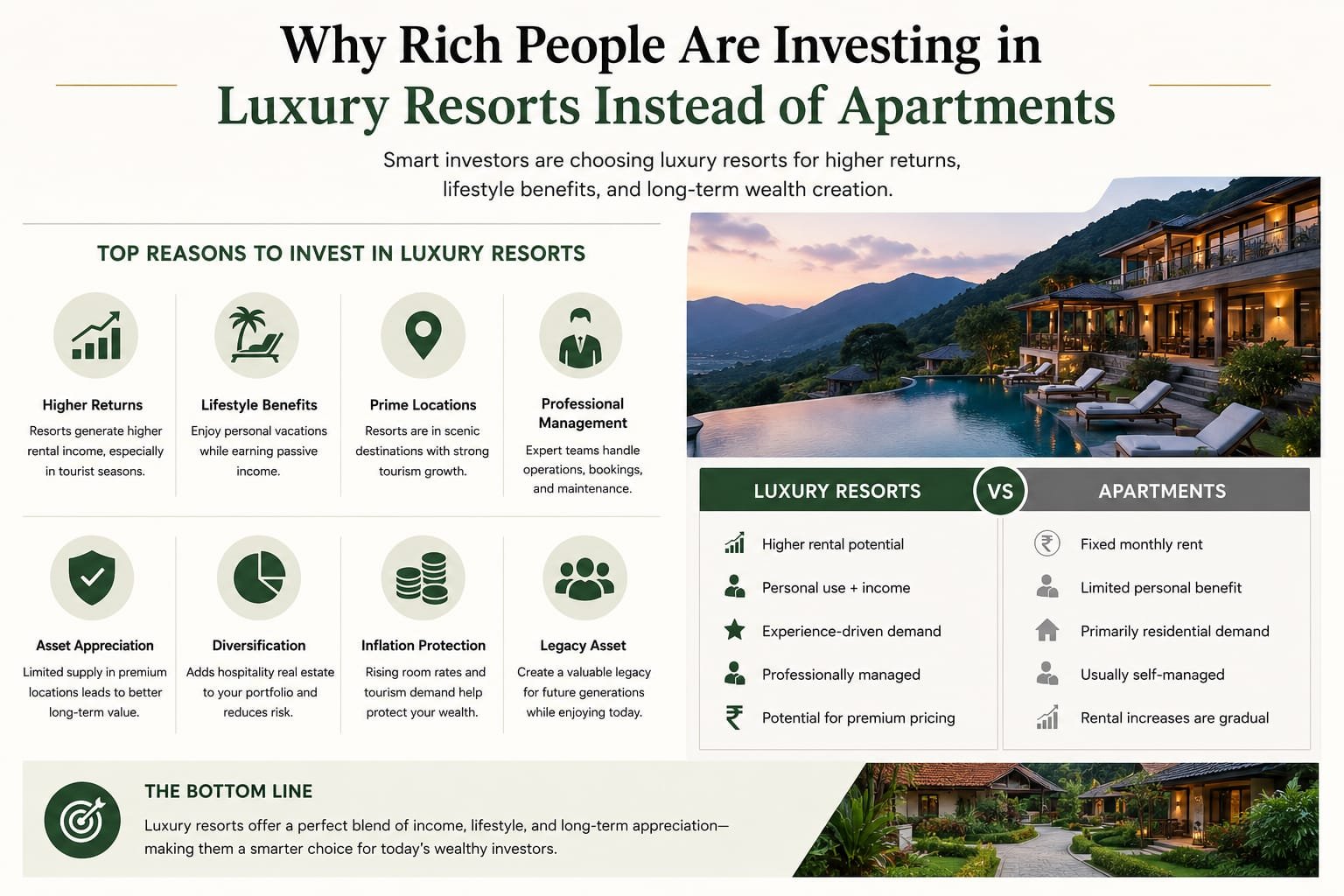
Managed hospitality is creating a new asset class within India’s real estate sector. Investors are increasingly looking beyond traditional residential and commercial properties to hospitality-driven investments.
Key reasons include:
- Growing tourism demand
- Higher rental yields
- Professional management support
- Diversified income streams
- Long-term capital appreciation
This evolution is attracting institutional investors, high-net-worth individuals, and retail investors seeking alternative real estate opportunities.
Emerging Trends in Managed Hospitality
Sustainable Tourism
Travelers are becoming more environmentally conscious. Hospitality operators are incorporating eco-friendly practices such as renewable energy, waste reduction, and sustainable construction.
Wellness-Focused Experiences
Properties offering yoga retreats, wellness programs, meditation spaces, and holistic experiences are gaining popularity among travelers seeking relaxation and rejuvenation.
Technology-Enabled Guest Experiences
Smart locks, contactless check-ins, AI-powered concierge services, and personalized recommendations are becoming standard features in managed hospitality properties.
Expansion into Tier-2 and Tier-3 Cities
As tourism spreads beyond major metropolitan destinations, managed hospitality operators are expanding into emerging leisure and business hubs, creating new growth opportunities.
Challenges Facing the Sector
Despite strong growth potential, the managed hospitality industry faces several challenges:
- Regulatory complexities
- Seasonal demand fluctuations
- Rising operational costs
- Talent acquisition and retention
- Maintaining service consistency across multiple properties
However, operators who successfully address these challenges can achieve significant long-term growth and profitability.
The Future of Managed Hospitality in India
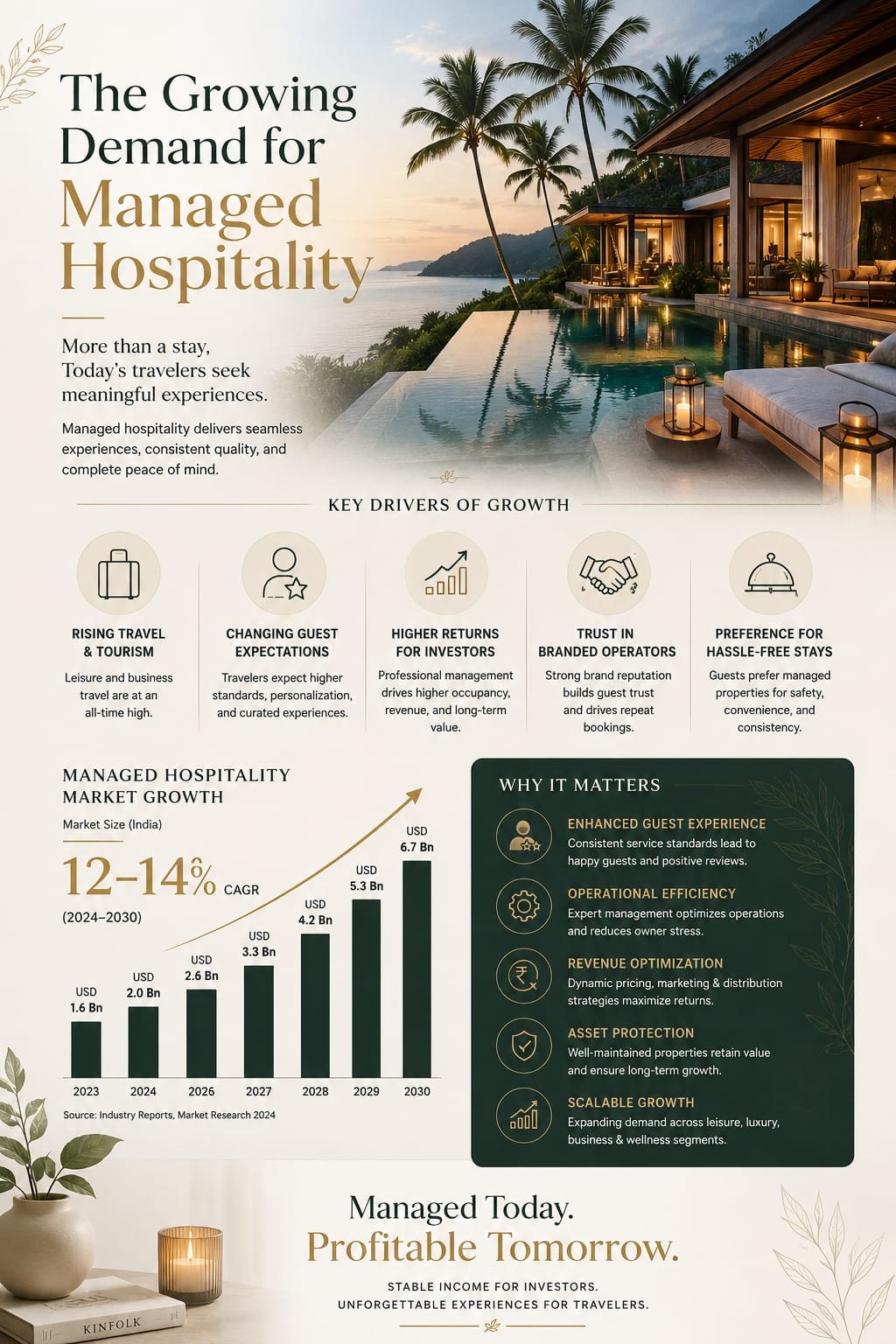
The future of managed hospitality in India looks exceptionally promising. Rising tourism, evolving traveler expectations, increased digital adoption, and growing investor interest are creating a favorable environment for sustained growth.
Industry experts expect managed hospitality assets to become a mainstream investment category, supported by professional operators, technology integration, and growing consumer demand for curated travel experiences.
As India’s tourism ecosystem continues to mature, managed hospitality will play a crucial role in shaping the future of travel and real estate investment.
Conclusion
The growing demand for managed hospitality experiences in India reflects a broader shift in consumer behavior, where travelers prioritize comfort, convenience, personalization, and unique experiences. Professionally managed villas, resorts, serviced apartments, and boutique properties are filling this gap by delivering consistent service standards and memorable stays.
For property owners, managed hospitality offers an attractive opportunity to generate passive income while benefiting from professional operations. For investors, it represents a rapidly emerging real estate asset class with strong growth potential. As domestic tourism, workations, experiential travel, and technology adoption continue to rise, managed hospitality is set to become one of the most influential sectors within India’s hospitality and real estate landscape.
Frequently Asked Questions (FAQs)
1. What is managed hospitality?
Managed hospitality refers to properties that are professionally operated by hospitality management companies, which handle guest services, maintenance, marketing, bookings, and overall operations.
2. Why is managed hospitality becoming popular in India?
The growth is driven by increasing domestic tourism, demand for experiential travel, remote work trends, technology adoption, and travelers’ preference for personalized and private accommodations.
3. What types of properties fall under managed hospitality?
Managed hospitality includes luxury villas, vacation homes, boutique hotels, serviced apartments, branded residences, resorts, and extended-stay accommodations.
4. How does managed hospitality benefit property owners?
Property owners benefit from professional management, higher occupancy rates, improved guest experiences, increased property value, and passive rental income.
5. Is managed hospitality a good real estate investment?
Yes. Managed hospitality assets often provide attractive rental yields, professional operational support, and long-term appreciation potential, making them an appealing alternative investment option.
6. What role does technology play in managed hospitality?
Technology enables efficient property management, dynamic pricing, online booking systems, contactless check-ins, guest communication, and personalized customer experiences.
7. How are workations influencing managed hospitality demand?
The rise of remote and hybrid work has increased demand for long-term stays in destinations that offer work-friendly environments, making managed hospitality properties highly attractive.
8. What is the future outlook for managed hospitality in India?
The sector is expected to experience strong growth due to increasing tourism, rising disposable incomes, expanding digital infrastructure, and growing investor confidence in hospitality-based real estate assets.