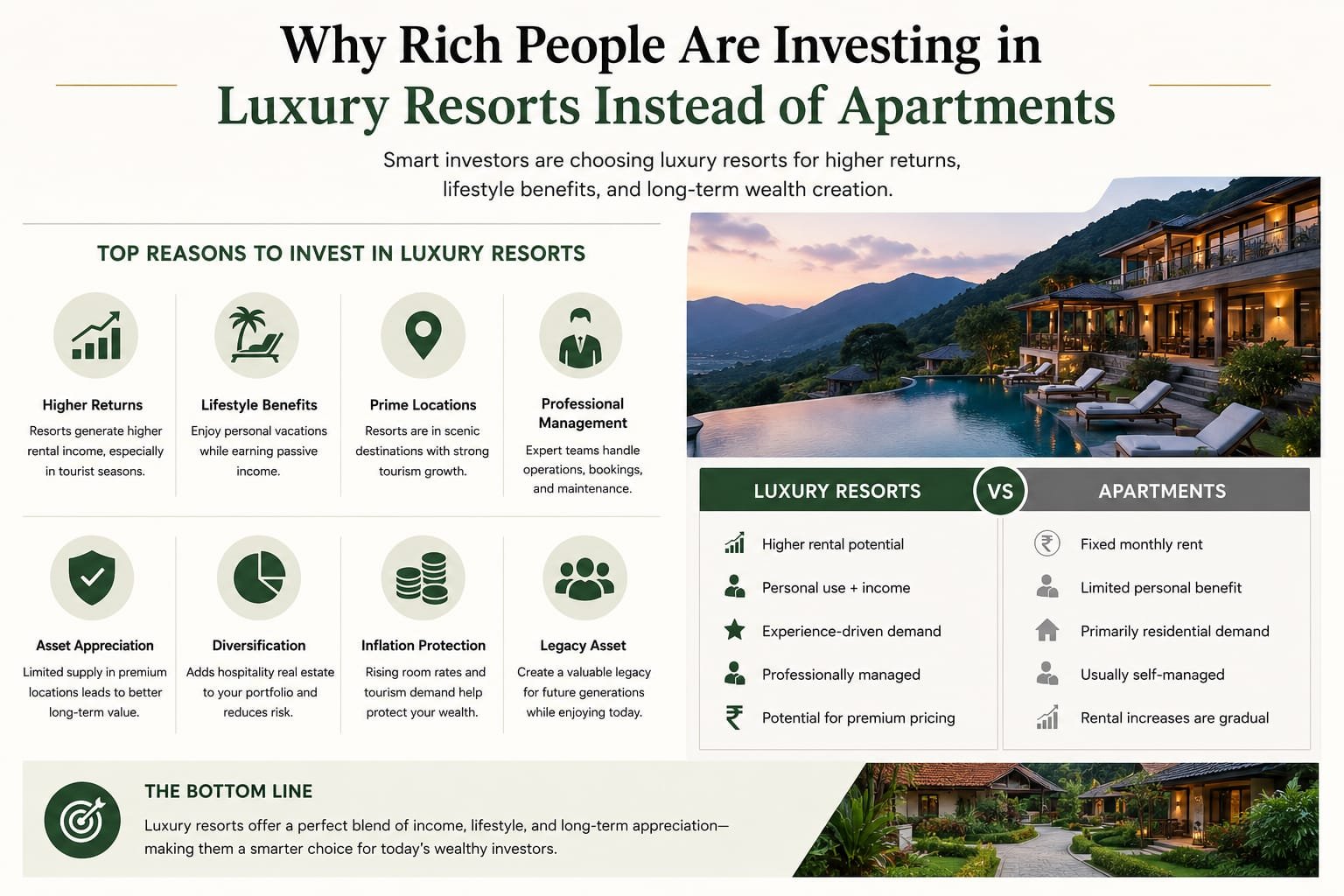
+For decades, real estate investing revolved around a familiar set of asset classes: residential, commercial, retail, industrial, and office spaces. Today, however, hospitality assets are emerging as a distinct and highly attractive investment category, reshaping how investors think about property ownership and returns.
What Are Hospitality Assets?
Hospitality assets include properties designed to accommodate travelers and guests, such as:
- Hotels
- Resorts
- Serviced apartments
- Vacation rentals
- Boutique stays
- Branded residences
- Co-living and hybrid hospitality spaces
Unlike traditional real estate assets that generate fixed rental income, hospitality properties earn revenue through guest stays, experiences, food and beverage services, events, and ancillary offerings.
Why Hospitality Assets Are Becoming a Separate Investment Category
1. Experience Economy Is Driving Demand
Modern consumers are spending more on experiences than possessions. Travel, wellness retreats, staycations, and luxury experiences have become lifestyle priorities, creating consistent demand for hospitality properties.
Investors are no longer simply buying buildings; they are investing in experience-driven businesses operating within real estate.
2. Higher Revenue Potential
Traditional commercial properties often rely on long-term lease agreements with fixed rental escalations. Hospitality assets, however, can adjust room rates daily based on demand, seasonality, and market conditions.
This dynamic pricing model allows owners to capitalize on:
- Peak tourism seasons
- Major events
- Business travel demand
- Holiday periods
As a result, hospitality assets can potentially generate stronger yields than conventional real estate.
3. Diversification for Investors
Hospitality investments offer exposure to economic drivers that differ from office or residential markets.
Factors influencing hospitality performance include:
- Tourism growth
- Airline connectivity
- Business conferences
- International travel trends
- Local attractions
This diversification helps investors reduce concentration risk within their portfolios.
4. Rise of Alternative Investment Structures
The emergence of:
- Fractional ownership
- Real estate investment platforms
- Hospitality-focused investment funds
- REITs specializing in hotels and resorts
has made hospitality assets accessible to a wider investor base. Investors no longer need to purchase an entire hotel to participate in hospitality-driven returns.
5. Technology Has Improved Asset Performance
Revenue management systems, online booking platforms, AI-driven pricing models, and guest analytics have transformed hospitality into a data-driven asset class.
Owners can now optimize occupancy, pricing, and guest experiences more efficiently than ever before.
How Hospitality Assets Impact Internet Traffic
The growth of hospitality real estate is closely tied to digital behavior and online traffic.
Increased Search Demand
As hospitality investments grow, internet users generate massive search traffic around:
- Hotels near tourist destinations
- Luxury resorts
- Vacation rentals
- Staycation packages
- Travel experiences
- Property investment opportunities
Millions of searches occur daily, creating significant online visibility for hospitality brands and destinations.
Growth of Travel Platforms
Hospitality assets fuel traffic for:
- Hotel booking websites
- Travel comparison platforms
- Tourism portals
- Review websites
- Travel blogs
Every new hotel, resort, or vacation rental contributes to a larger digital ecosystem that attracts visitors online.
Content Marketing Explosion
Hospitality businesses heavily invest in:
- Destination guides
- Travel blogs
- Video content
- Social media campaigns
- Influencer partnerships
This content generates substantial organic traffic and improves online discoverability.
For example, a luxury resort opening in Goa may create thousands of monthly searches related to:
- Best resorts in Goa
- Luxury stays in Goa
- Beachfront hotels in Goa
- Weekend getaway packages
These searches drive traffic across search engines, booking platforms, and travel publications.
User Reviews Drive Continuous Engagement
Hospitality properties generate ongoing digital activity through:
- Reviews
- Ratings
- Photos
- Travel experiences
- Social media posts
Unlike traditional office buildings, hospitality assets continuously create fresh online content, keeping internet traffic active long after the property is developed.
The Future of Hospitality Real Estate
Hospitality assets are no longer viewed solely as operational businesses. They are evolving into a hybrid investment category that combines:
- Real estate ownership
- Experience-based revenue
- Technology-driven operations
- Tourism growth
- Digital marketing influence
As global travel continues to recover and consumers prioritize experiences, hospitality assets are likely to become one of the fastest-growing segments of alternative real estate investment. Their ability to generate both financial returns and digital engagement makes them fundamentally different from traditional property classes, positioning them as a powerful asset category for the future.
Key Takeaway
Hospitality assets are creating a new real estate investment category because they blend property ownership with operating business revenues, technology, and consumer experiences. At the same time, they significantly increase internet traffic through travel searches, booking platforms, reviews, content marketing, and social media engagement—making them one of the most digitally connected sectors in modern real estate.v