Introduction
The hospitality industry is evolving rapidly, and managed hospitality assets have emerged as a preferred investment and operational model for property owners and investors. These assets combine real estate ownership with professional hospitality management, creating opportunities for consistent revenue generation while delivering exceptional guest experiences.
From luxury villas and boutique resorts to serviced apartments and vacation homes, managed hospitality assets are transforming the way hospitality properties are owned, operated, and monetized. Understanding how these assets work can help investors make informed decisions and maximize returns in the growing hospitality sector.
What Are Managed Hospitality Assets?
Managed hospitality assets are properties owned by individual investors, developers, or institutions but professionally operated by hospitality management companies. These operators handle all aspects of property management, guest services, marketing, maintenance, and revenue optimization.
Examples of managed hospitality assets include:
- Luxury villas
- Vacation homes
- Boutique hotels
- Serviced apartments
- Resorts
- Branded residences
- Corporate stay accommodations
The goal is to provide hotel-like service standards while maximizing occupancy and profitability.
The Business Model Behind Managed Hospitality Assets
Managed hospitality assets typically involve three key stakeholders:
1. Property Owner
The owner invests in and owns the physical property. Their primary objective is to generate income and achieve long-term appreciation without managing daily operations.
2. Hospitality Operator
A professional hospitality management company oversees:
- Property maintenance
- Guest relations
- Housekeeping
- Reservations
- Marketing
- Pricing strategies
- Revenue management
The operator ensures the property meets hospitality standards and remains competitive in the market.
3. Guests
Travelers book the property through direct channels, online travel agencies (OTAs), or hospitality platforms. Guests receive a seamless and professionally managed experience.
Step-by-Step: How Managed Hospitality Assets Work
Step 1: Property Acquisition or Development
The process begins when an investor purchases or develops a hospitality-focused property in a desirable location.
Common investment destinations include:
- Beach destinations
- Hill stations
- Tourist hubs
- Business districts
- Wellness retreats
- Emerging travel destinations
Location plays a crucial role in determining future occupancy and revenue potential.
Step 2: Partnership with a Hospitality Management Company
Once the property is ready, the owner enters into an agreement with a hospitality management company.
The management company takes responsibility for:
- Property setup
- Brand positioning
- Operational planning
- Staff recruitment
- Service standards
- Technology integration
This partnership allows owners to benefit from professional expertise and industry best practices.
Step 3: Property Onboarding and Branding
The operator prepares the property for commercial operations by:
- Furnishing and styling the property
- Implementing hospitality standards
- Installing booking systems
- Creating guest service protocols
- Developing marketing materials
The property is then positioned within a target market segment such as luxury, premium, wellness, business, or family travel.
Step 4: Marketing and Distribution
Hospitality operators promote the property through multiple channels:
- Direct websites
- Online travel agencies
- Travel partners
- Social media campaigns
- Search engine marketing
- Influencer collaborations
A strong distribution strategy helps maximize visibility and bookings throughout the year.
Step 5: Revenue Management
One of the most important functions of managed hospitality is dynamic pricing.
Operators use market data to adjust room rates based on:
- Seasonal demand
- Local events
- Competitor pricing
- Occupancy levels
- Booking trends
This approach helps maximize revenue while maintaining healthy occupancy rates.
Step 6: Guest Experience Management
Once guests arrive, the hospitality operator manages all customer-facing services, including:
- Reservations
- Check-in and check-out
- Housekeeping
- Concierge services
- Maintenance support
- Food and beverage coordination
- Local experience recommendations
Exceptional guest experiences often lead to repeat bookings and positive reviews.
Step 7: Owner Reporting and Revenue Sharing
Owners receive regular reports covering:
- Occupancy rates
- Revenue performance
- Operating expenses
- Guest feedback
- Property maintenance updates
Depending on the agreement, revenue may be shared through:
- Fixed lease models
- Revenue-sharing models
- Profit-sharing arrangements
- Guaranteed return structures
This transparency allows owners to track performance without handling daily operations.
Benefits of Managed Hospitality Assets
Professional Property Management
Owners can rely on experienced professionals to maintain service quality and operational efficiency.
Higher Occupancy Rates
Effective marketing and revenue management help attract more guests and increase bookings.
Passive Income Generation
Investors earn income while avoiding the complexities of self-managing hospitality properties.
Enhanced Guest Satisfaction
Professional operators maintain consistent service standards that improve reviews and customer loyalty.
Long-Term Asset Appreciation
As tourism grows and destinations develop, hospitality assets can appreciate significantly in value.
Revenue Streams in Managed Hospitality Assets
Managed hospitality properties often generate income through multiple channels:
- Room rentals
- Extended stays
- Event hosting
- Food and beverage services
- Wellness programs
- Experience packages
- Corporate bookings
These diversified revenue streams can improve profitability and reduce dependence on a single source of income.
Technology’s Role in Managed Hospitality
Modern hospitality operators leverage technology to improve efficiency and guest experiences.
Common tools include:
- Property management systems (PMS)
- Channel managers
- Revenue management software
- Guest communication platforms
- Smart access systems
- Online reputation management tools
Technology enables operators to scale operations while maintaining service consistency.
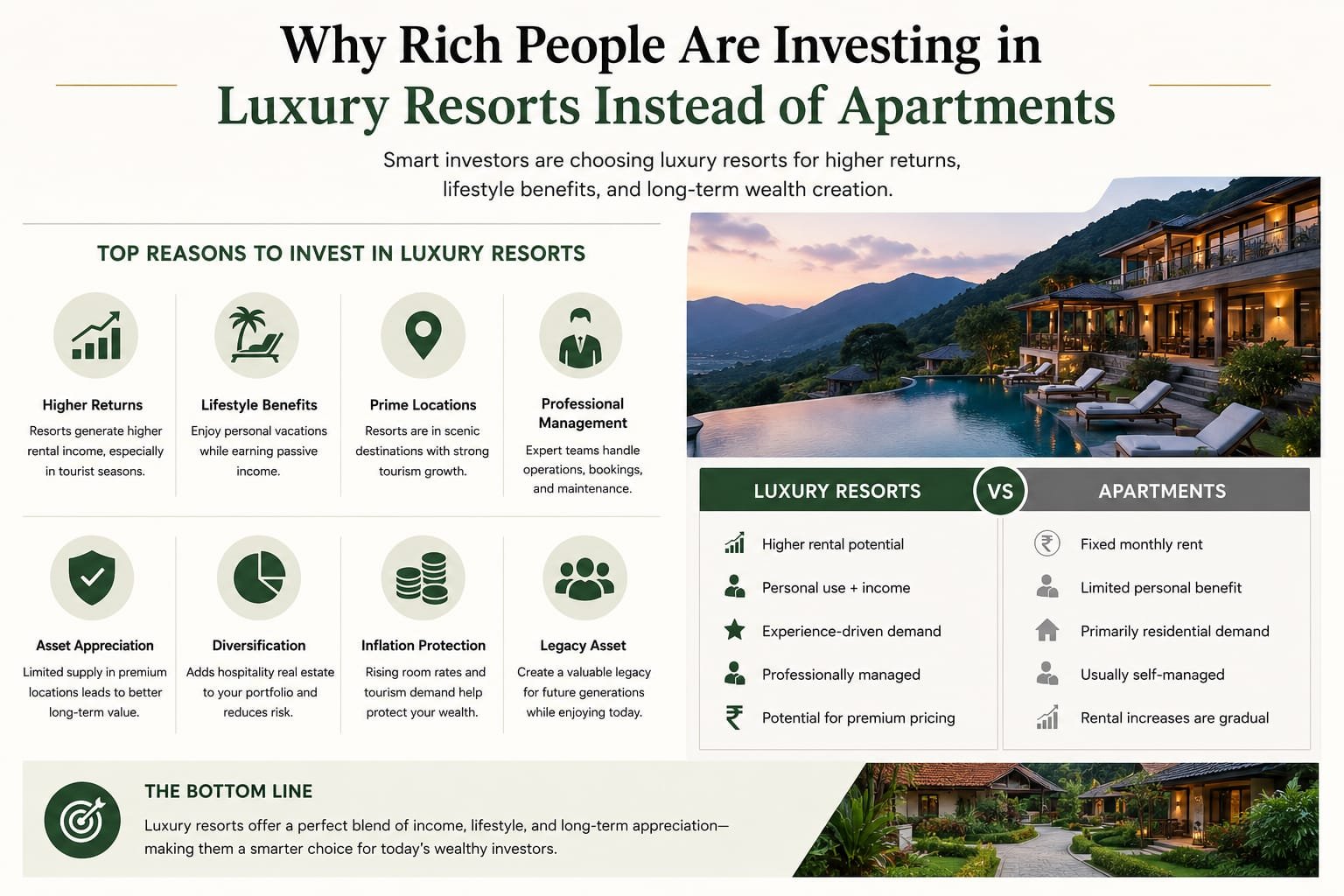
Why Investors Are Choosing Managed Hospitality Assets
Several factors are driving investor interest:
- Growth in domestic tourism
- Increasing demand for experiential travel
- Expansion of workation culture
- Higher rental yield potential
- Professional operational support
- Reduced management burden
Compared to traditional rental properties, managed hospitality assets often offer stronger income potential and enhanced guest demand.
Challenges to Consider
While the sector offers significant opportunities, investors should also evaluate:
- Seasonal occupancy fluctuations
- Operational expenses
- Regulatory compliance
- Market competition
- Economic slowdowns
- Dependence on tourism demand
Partnering with a reputable operator can help mitigate many of these risks.
The Future of Managed Hospitality Assets
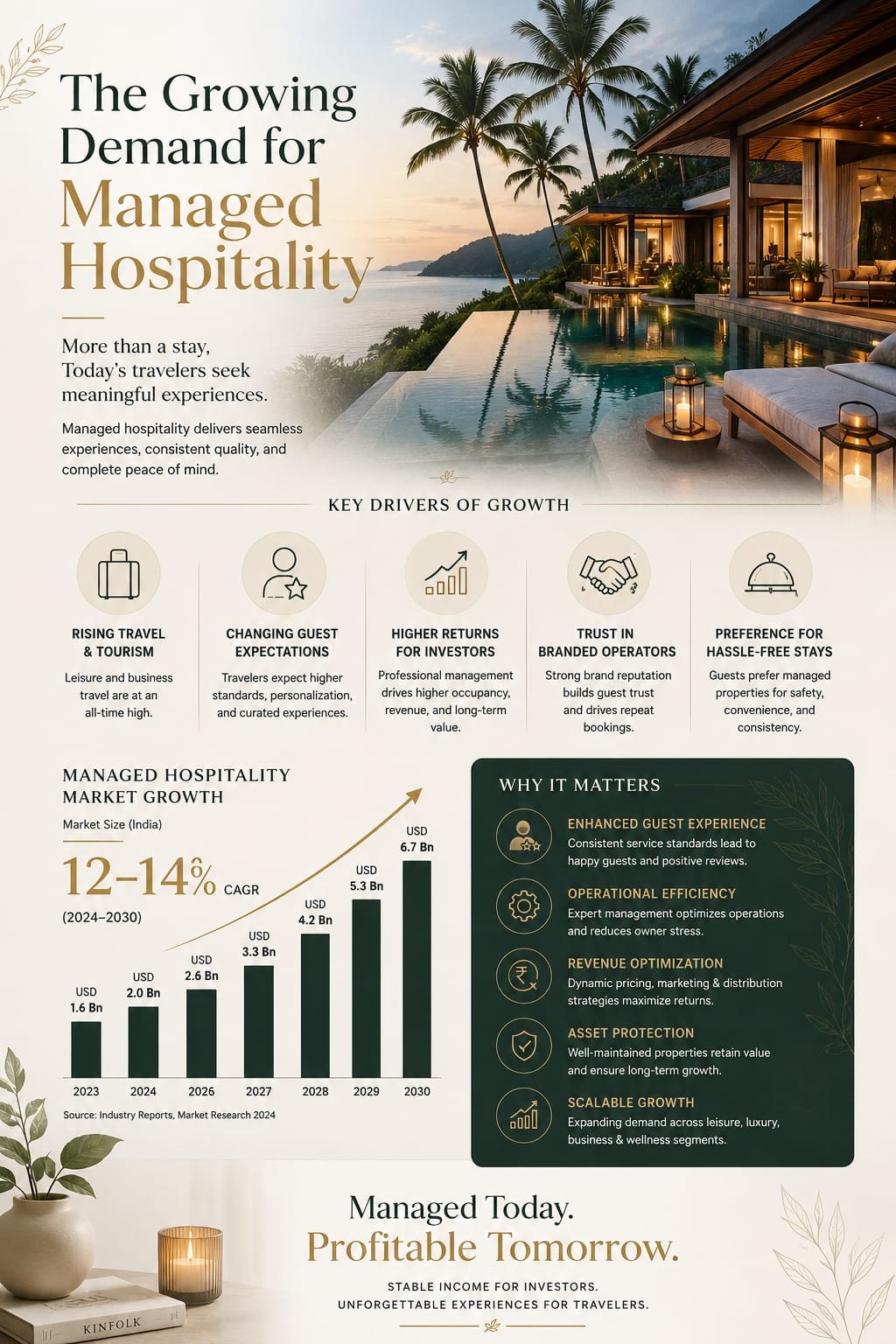
The future looks promising as travelers increasingly seek personalized, professionally managed accommodations. Rising domestic tourism, infrastructure development, digital booking adoption, and experiential travel trends are expected to support continued growth.
As hospitality and real estate continue to converge, managed hospitality assets are becoming an attractive investment category for both institutional and individual investors.
Conclusion
Managed hospitality assets work by combining real estate ownership with professional hospitality management. Property owners benefit from passive income and long-term appreciation, while experienced operators handle marketing, guest services, maintenance, and revenue optimization.
This model creates a win-win situation for investors and guests alike. As travel demand grows and consumer preferences shift toward high-quality experiences, managed hospitality assets are expected to play an increasingly important role in the future of hospitality and real estate investment.
FAQs
1. What is a managed hospitality asset?
A managed hospitality asset is a property owned by an investor but professionally operated by a hospitality management company that handles daily operations and guest services.
2. How do property owners earn income from managed hospitality assets?
Owners earn income through rental revenue, profit-sharing agreements, lease arrangements, or guaranteed return models depending on their management contract.
3. What types of properties can become managed hospitality assets?
Luxury villas, serviced apartments, boutique hotels, resorts, vacation homes, and branded residences can all operate as managed hospitality assets.
4. Why are managed hospitality assets becoming popular?
They offer professional management, passive income opportunities, better guest experiences, and potentially higher returns compared to traditional rental properties.
5. Are managed hospitality assets a good investment?
For investors seeking exposure to tourism-driven real estate with professional operational support, managed hospitality assets can provide attractive income and long-term growth potentil.