The Evolution of Hospitality Investments in India: From Traditional Hotels to Modern Resort Ownership
Introduction
India’s hospitality industry has experienced a remarkable transformation over the past two decades. What was once dominated by traditional hotels and business accommodations has evolved into a diverse investment landscape featuring luxury resorts, wellness retreats, branded residences, eco-tourism destinations, and fractional ownership models.
Driven by rapid urbanization, rising disposable incomes, domestic tourism growth, and changing consumer preferences, hospitality investments have become one of the most attractive segments of the real estate market. Today, investors are no longer looking at hospitality solely as a business—they are viewing it as a long-term wealth-building opportunity that combines capital appreciation, recurring income, and lifestyle benefits.
In this blog, we explore how hospitality investments in India have evolved, the key trends shaping the industry, and why now is an ideal time to invest.
The Early Days of Hospitality Investments
Historically, hospitality investments in India were largely confined to:
- Luxury hotels in metropolitan cities
- Business hotels near commercial hubs
- Budget accommodations for domestic travelers
- Family-owned resorts in popular tourist destinations
Investment opportunities were limited to institutional investors, hotel chains, and high-net-worth individuals due to the significant capital required to own or develop hospitality properties.
During this period, hospitality was viewed primarily as an operational business rather than an investment asset.
The Rise of Domestic Tourism
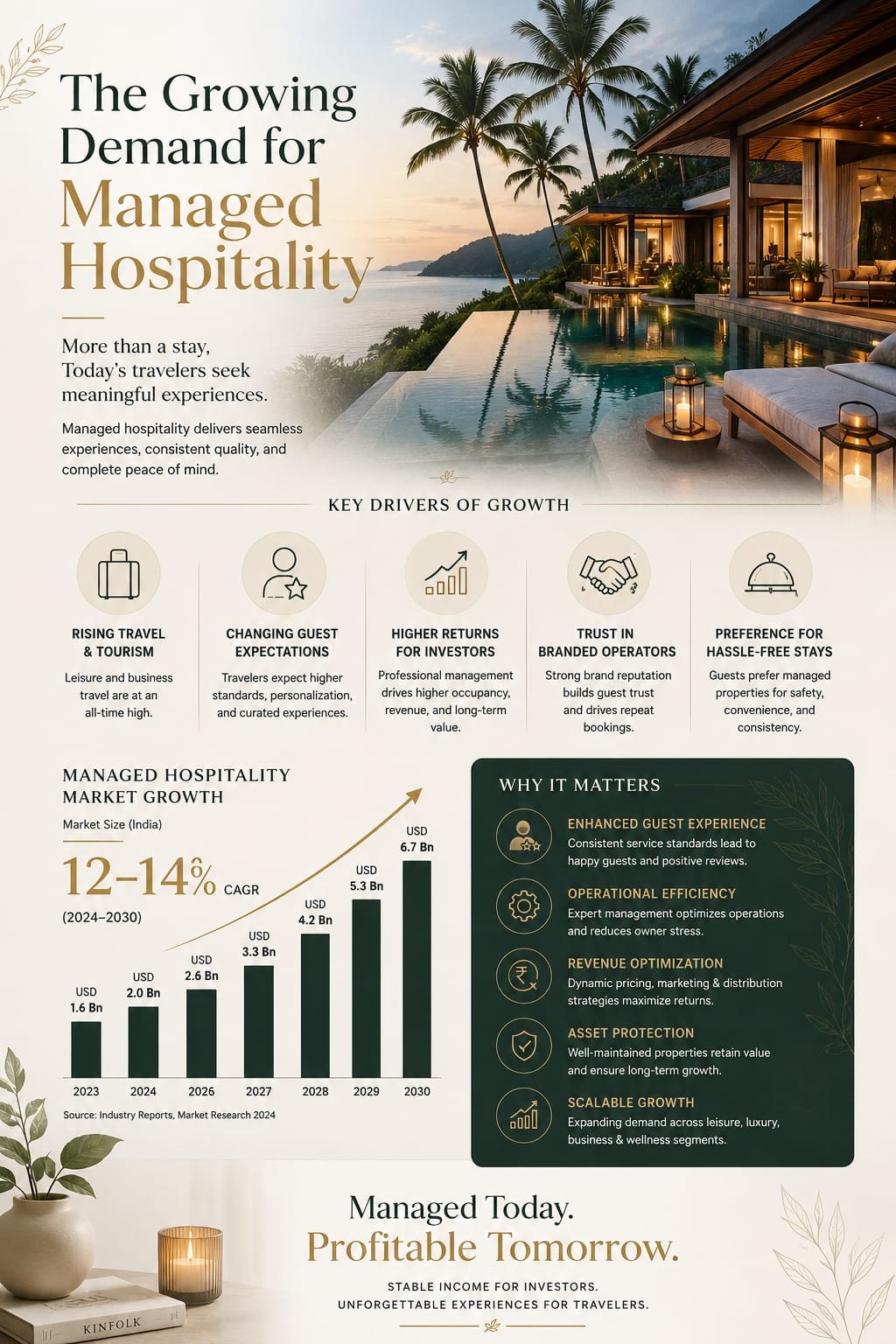
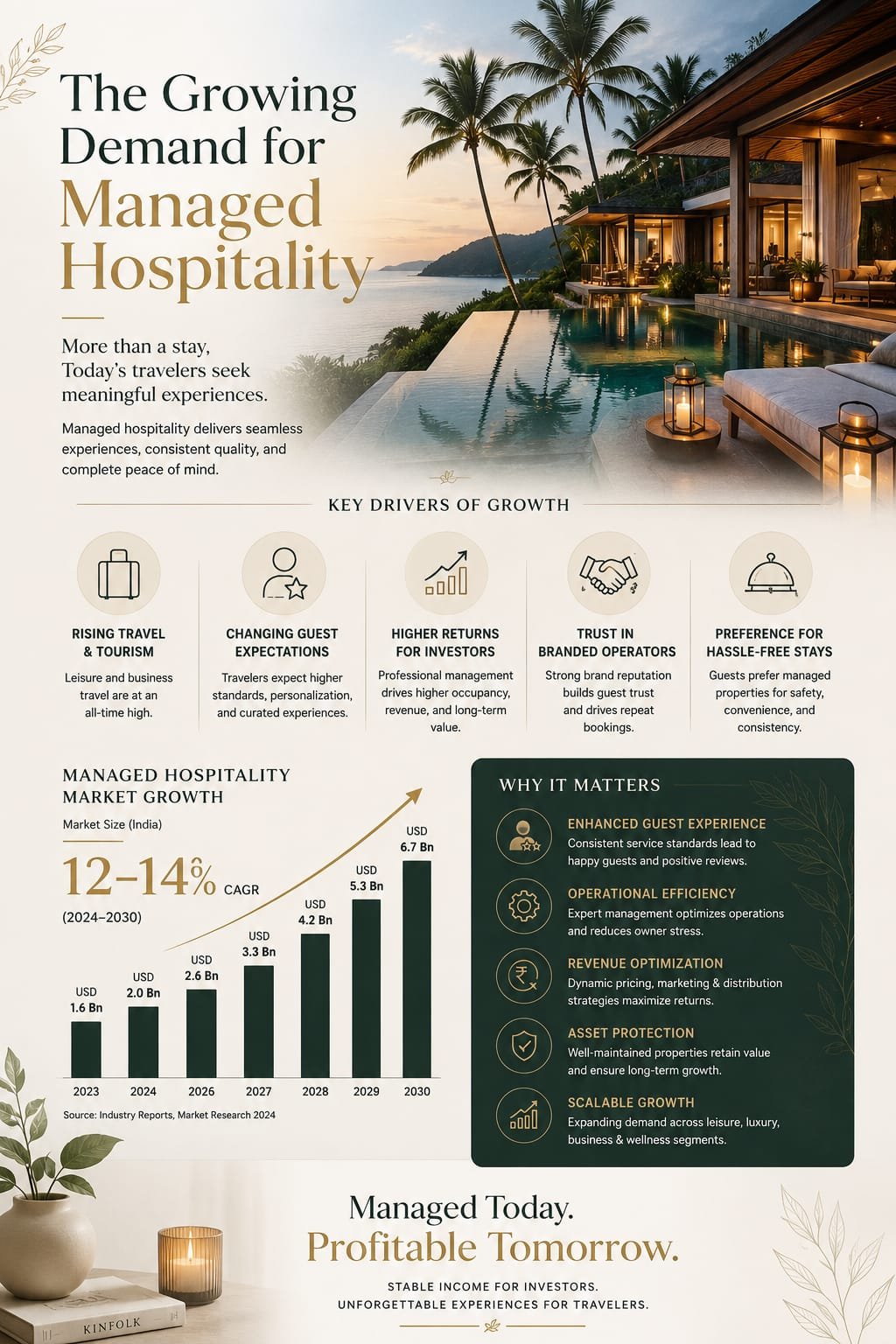
One of the biggest catalysts behind hospitality investment growth has been India’s expanding domestic tourism market.
Several factors have contributed to this growth:
- Increasing disposable income
- Affordable air travel
- Improved highway infrastructure
- Remote work flexibility
- Rising interest in weekend getaways
- Government tourism initiatives
Today, travelers seek unique experiences instead of simply booking hotel rooms. This shift has created demand for:
- Luxury resorts
- Boutique stays
- Nature retreats
- Wellness resorts
- Adventure tourism destinations
- Heritage properties
As tourism demand expanded beyond major cities, investment opportunities spread into emerging destinations across India.
Changing Investor Mindset
Modern investors no longer view hospitality as a risky niche sector.
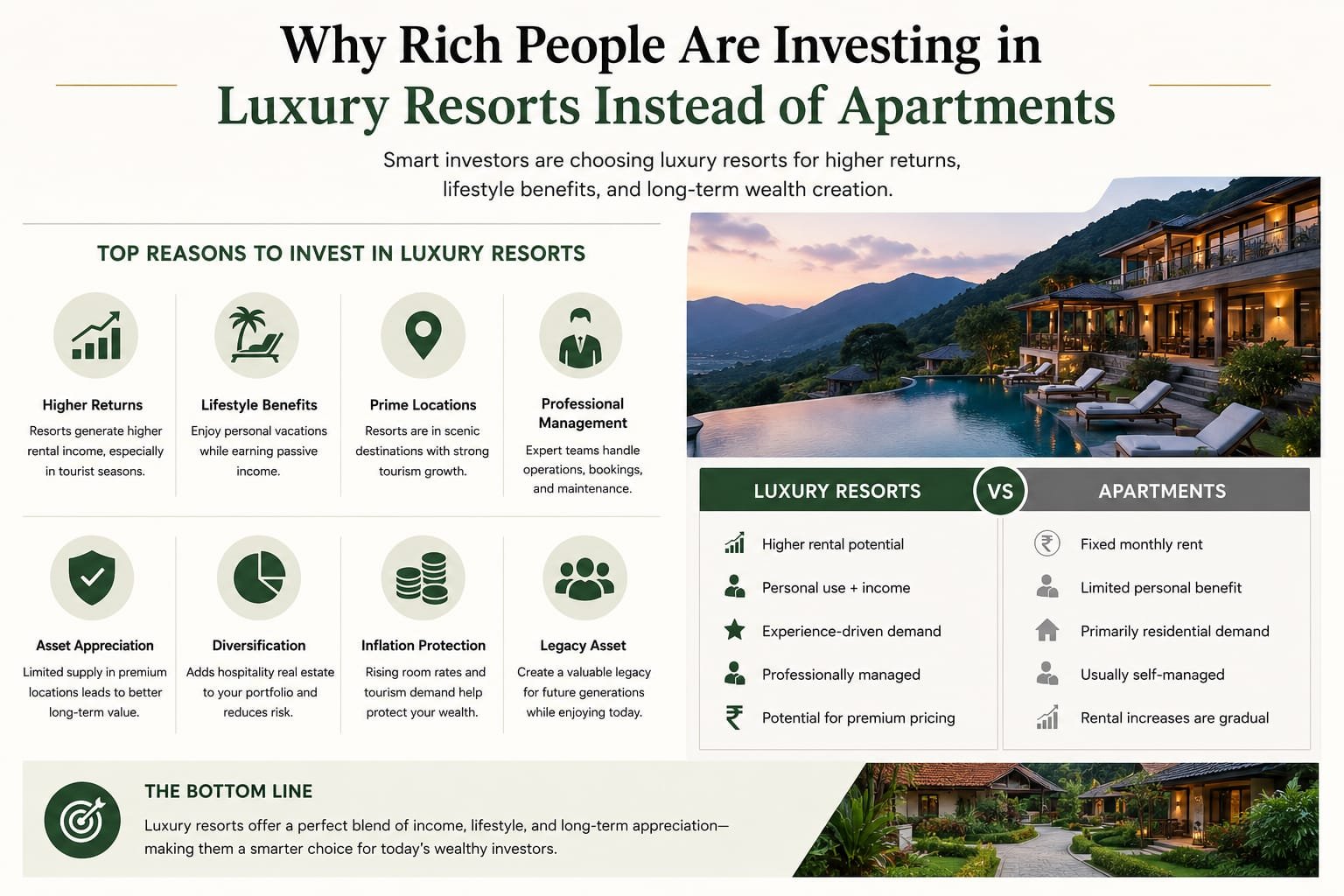
Instead, hospitality real estate is increasingly considered a diversified investment that offers:
- Rental income
- Asset appreciation
- Portfolio diversification
- Inflation protection
- Lifestyle value
Unlike traditional residential properties that often remain vacant, professionally managed hospitality assets generate income through guest bookings.
This shift has attracted:
- First-time investors
- NRIs
- High-net-worth individuals
- Working professionals
- Retirement planners
The Emergence of Resort Investments
Resort investments have become one of the fastest-growing hospitality segments.
Modern travelers increasingly prefer destinations that offer:
- Privacy
- Wellness experiences
- Natural surroundings
- Luxury amenities
- Family-friendly environments
- Premium hospitality services
As a result, luxury resort developments have expanded into:
- Hill stations
- Forest regions
- Riverside locations
- Beach destinations
- Eco-tourism zones
These properties often enjoy higher occupancy during holidays and long weekends, creating attractive rental opportunities.
Technology Has Changed Everything
Digital platforms have revolutionized hospitality investments.
Technology now enables:
- Online property management
- Automated bookings
- Dynamic pricing
- Revenue optimization
- Digital guest experiences
- Investor performance tracking
Property owners can now monitor occupancy, rental earnings, and investment performance in real time.
This transparency has significantly improved investor confidence.
Fractional Ownership is Opening New Doors
One of the biggest innovations in hospitality investing is fractional ownership.
Instead of purchasing an entire resort property, multiple investors own shares in a professionally managed asset.
Benefits include:
- Lower investment entry
- Shared ownership
- Professional management
- Rental income distribution
- Reduced maintenance responsibilities
- Diversification opportunities
Fractional ownership has made luxury hospitality investments accessible to a wider audience.
Government Support for Tourism
The Indian government has actively promoted tourism through:
- Infrastructure development
- Airport expansion
- Road connectivity improvements
- Heritage tourism initiatives
- Eco-tourism promotion
- State tourism incentives
Improved accessibility has increased visitor numbers to emerging destinations, supporting higher demand for hospitality properties.
These developments have strengthened the long-term outlook for hospitality investments.
Sustainability is Becoming a Major Investment Driver
Modern travelers increasingly prefer environmentally responsible accommodations.
Developers now focus on:
- Green building practices
- Solar energy
- Rainwater harvesting
- Waste management systems
- Organic landscaping
- Energy-efficient operations
Sustainable hospitality projects often enjoy stronger brand positioning and attract environmentally conscious travelers.
For investors, this translates into long-term value creation.
Wellness Tourism is Creating New Opportunities
India’s wellness tourism sector has grown rapidly.
Luxury wellness resorts now offer:
- Yoga retreats
- Meditation programs
- Ayurvedic treatments
- Spa experiences
- Detox programs
- Holistic healing
Health-conscious travelers are willing to spend more on wellness experiences, making these properties attractive investment options.
Hospitality Investments Beyond Major Cities
Investment hotspots are no longer limited to metropolitan areas.
Growing destinations include:
- Hill retreats
- Lakeside developments
- Spiritual tourism centers
- Wildlife destinations
- Heritage towns
- Luxury countryside resorts
These locations often offer:
- Lower land acquisition costs
- Higher appreciation potential
- Growing tourist demand
- Limited premium accommodation supply
Income Potential Through Professional Management
Modern hospitality investment models are professionally managed.
Management companies handle:
- Marketing
- Guest services
- Housekeeping
- Maintenance
- Revenue management
- Booking platforms
This allows investors to earn passive income without managing daily operations.
Professional management also helps maintain consistent service quality and occupancy levels.
Risks to Consider
Like any investment, hospitality real estate comes with risks:
- Seasonal demand fluctuations
- Economic slowdowns
- Operational expenses
- Market competition
- Regulatory changes
Before investing, buyers should evaluate:
- Location quality
- Tourism demand
- Developer reputation
- Management expertise
- Occupancy history
- Exit strategy
Conducting thorough due diligence is essential for long-term success.
The Future of Hospitality Investments in India
The future looks promising as several long-term trends continue to support growth:
- Rising domestic tourism
- International tourist arrivals
- Work-from-anywhere culture
- Luxury travel demand
- Wellness tourism expansion
- Digital booking platforms
- Sustainable development
- Premium experiential travel
As hospitality evolves from a traditional business model into an investment asset class, more investors are expected to participate in this growing market.
Conclusion
The evolution of hospitality investments in India reflects changing lifestyles, stronger tourism demand, and innovative ownership models. From traditional hotels to luxury resorts, wellness retreats, and fractional ownership opportunities, the sector has become more accessible and attractive than ever before.
For investors seeking a combination of passive income, long-term appreciation, and lifestyle benefits, hospitality real estate offers a compelling opportunity. By choosing the right location, partnering with reputable developers, and focusing on professionally managed assets, investors can participate in one of India’s most dynamic and future-ready investment sectors.
As India’s tourism and hospitality ecosystem continues to expand, hospitality investments are poised to play a significant role in shaping the future of real estate wealth creation.The Evolution of Hospitality Investments in India: From Traditional Hotels to Modern Resort Ownership
opportunities were limited to institutional investors, hotel chains, and high-net-worth individuals due to the significant capital required to own or develop hospitality properties.
During this period, hospitality was viewed primarily as an operational business rather than an investment asset.
The Rise of Domestic Tourism
One of the biggest catalysts behind hospitality investment growth has been India’s expanding domestic tourism market.
Several factors have contributed to this growth:
- Increasing disposable income
- Affordable air travel
- Improved highway infrastructure
- Remote work flexibility
- Rising interest in weekend getaways
- Government tourism initiatives
Today, travelers seek unique experiences instead of simply booking hotel rooms. This shift has created demand for:
- Luxury resorts
- Boutique stays
- Nature retreats
- Wellness resorts
- Adventure tourism destinations
- Heritage properties
As tourism demand expanded beyond major cities, investment opportunities spread into emerging destinations across India.
Changing Investor Mindset
Modern investors no longer view hospitality as a risky niche sector.
Instead, hospitality real estate is increasingly considered a diversified investment that offers:
- Rental income
- Asset appreciation
- Portfolio diversification
- Inflation protection
- Lifestyle value
Unlike traditional residential properties that often remain vacant, professionally managed hospitality assets generate income through guest bookings.
This shift has attracted:
- First-time investors
- NRIs
- High-net-worth individuals
- Working professionals
- Retirement planners
The Emergence of Resort Investments
Resort investments have become one of the fastest-growing hospitality segments.
Modern travelers increasingly prefer destinations that offer:
- Privacy
- Wellness experiences
- Natural surroundings
- Luxury amenities
- Family-friendly environments
- Premium hospitality services
As a result, luxury resort developments have expanded into:
- Hill stations
- Forest regions
- Riverside locations
- Beach destinations
- Eco-tourism zones
These properties often enjoy higher occupancy during holidays and long weekends, creating attractive rental opportunities.
Technology Has Changed Everything
Digital platforms have revolutionized hospitality investments.
Technology now enables:
- Online property management
- Automated bookings
- Dynamic pricing
- Revenue optimization
- Digital guest experiences
- Investor performance tracking
Property owners can now monitor occupancy, rental earnings, and investment performance in real time.
This transparency has significantly improved investor confidence.
Fractional Ownership is Opening New Doors
One of the biggest innovations in hospitality investing is fractional ownership.
Instead of purchasing an entire resort property, multiple investors own shares in a professionally managed asset.
Benefits include:
- Lower investment entry
- Shared ownership
- Professional management
- Rental income distribution
- Reduced maintenance responsibilities
- Diversification opportunities
Fractional ownership has made luxury hospitality investments accessible to a wider audience.
Government Support for Tourism
The Indian government has actively promoted tourism through:
- Infrastructure development
- Airport expansion
- Road connectivity improvements
- Heritage tourism initiatives
- Eco-tourism promotion
- State tourism incentives
Improved accessibility has increased visitor numbers to emerging destinations, supporting higher demand for hospitality properties.
These developments have strengthened the long-term outlook for hospitality investments.
Sustainability is Becoming a Major Investment Driver
Modern travelers increasingly prefer environmentally responsible accommodations.
Developers now focus on:
- Green building practices
- Solar energy
- Rainwater harvesting
- Waste management systems
- Organic landscaping
- Energy-efficient operations
Sustainable hospitality projects often enjoy stronger brand positioning and attract environmentally conscious travelers.
For investors, this translates into long-term value creation.
Wellness Tourism is Creating New Opportunities
India’s wellness tourism sector has grown rapidly.
Luxury wellness resorts now offer:
- Yoga retreats
- Meditation programs
- Ayurvedic treatments
- Spa experiences
- Detox programs
- Holistic healing
Health-conscious travelers are willing to spend more on wellness experiences, making these properties attractive investment options.
Hospitality Investments Beyond Major Cities
Investment hotspots are no longer limited to metropolitan areas.
Growing destinations include:
- Hill retreats
- Lakeside developments
- Spiritual tourism centers
- Wildlife destinations
- Heritage towns
- Luxury countryside resorts
These locations often offer:
- Lower land acquisition costs
- Higher appreciation potential
- Growing tourist demand
- Limited premium accommodation supply
Income Potential Through Professional Management
Modern hospitality investment models are professionally managed.
Management companies handle:
- Marketing
- Guest services
- Housekeeping
- Maintenance
- Revenue management
- Booking platforms
This allows investors to earn passive income without managing daily operations.
Professional management also helps maintain consistent service quality and occupancy levels.
Risks to Consider
Like any investment, hospitality real estate comes with risks:
- Seasonal demand fluctuations
- Economic slowdowns
- Operational expenses
- Market competition
- Regulatory changes
Before investing, buyers should evaluate:
- Location quality
- Tourism demand
- Developer reputation
- Management expertise
- Occupancy history
- Exit strategy
Conducting thorough due diligence is essential for long-term success.
The Future of Hospitality Investments in India
The future looks promising as several long-term trends continue to support growth:
- Rising domestic tourism
- International tourist arrivals
- Work-from-anywhere culture
- Luxury travel demand
- Wellness tourism expansion
- Digital booking platforms
- Sustainable development
- Premium experiential travel
As hospitality evolves from a traditional business model into an investment asset class, more investors are expected to participate in this growing market.
Conclusion
The evolution of hospitality investments in India reflects changing lifestyles, stronger tourism demand, and innovative ownership models. From traditional hotels to luxury resorts, wellness retreats, and fractional ownership opportunities, the sector has become more accessible and attractive than ever before.
For investors seeking a combination of passive income, long-term appreciation, and lifestyle benefits, hospitality real estate offers a compelling opportunity. By choosing the right location, partnering with reputable developers, and focusing on professionally managed assets, investors can participate in one of India’s most dynamic and future-ready investment sectors.
As India’s tourism and hospitality ecosystem continues to expand, hospitality investments are poised to play a significant role in shaping the future of real estate wealth creation.Introduction
India’s hospitality industry has experienced a remarkable transformation over the past two decades. What was once dominated by traditional hotels and business accommodations has evolved into a diverse investment landscape featuring luxury resorts, wellness retreats, branded residences, eco-tourism destinations, and fractional ownership models.
Driven by rapid urbanization, rising disposable incomes, domestic tourism growth, and changing consumer preferences, hospitality investments have become one of the most attractive segments of the real estate market. Today, investors are no longer looking at hospitality solely as a business—they are viewing it as a long-term wealth-building opportunity that combines capital appreciation, recurring income, and lifestyle benefits.
In this blog, we explore how hospitality investments in India have evolved, the key trends shaping the industry, and why now is an ideal time to invest.
he Early Days of Hospitality InvestmentsHistorically, hospitality investments in India were largely confined to:
- Luxury hotels in metropolitan cities
- Business hotels near commercial hubs
- Budget accommodations for domestic travelers
- Family-owned resorts in popular tourist destinations
Investment opportunities were limited to institutional investors, hotel chains, and high-net-worth individuals due to the significant capital required to own or develop hospitality properties.
During this period, hospitality was viewed primarily as an operational business rather than an investment asset.
Today, travelers seek unique experiences instead of simply booking hotel rooms. This shift has created demand for:
- Luxury resorts
- Boutique stays
- Nature retreats
- Wellness resorts
- Adventure tourism destinations
- Heritage properties
As tourism demand expanded beyond major cities, investment opportunities spread into emerging destinations across India.
Changing Investor Mindset
Modern investors no longer view hospitality as a risky niche sector.
Instead, hospitality real estate is increasingly considered a diversified investment that offers:
- Rental income
- Asset appreciation
- Portfolio diversification
- Inflation protection
- Lifestyle value
Unlike traditional residential properties that often remain vacant, professionally managed hospitality assets generate income through guest bookings.
This shift has attracted:
- First-time investors
- NRIs
- High-net-worth individuals
- Working professionals
- Retirement planners
The Emergence of Resort Investments
Resort investments have become one of the fastest-growing hospitality segments.
Modern travelers increasingly prefer destinations that offer:
- Privacy
- Wellness experiences
- Natural surroundings
- Luxury amenities
- Family-friendly environments
- Premium hospitality services
As a result, luxury resort developments have expanded into:
- Hill stations
- Forest regions
- Riverside locations
- Beach destinations
- Eco-tourism zones
These properties often enjoy higher occupancy during holidays and long weekends, creating attractive rental opportunities.
Technology Has Changed Everything
Digital platforms have revolutionized hospitality investments.
Technology now enables:
- Online property management
- Automated bookings
- Dynamic pricing
- Revenue optimization
- Digital guest experiences
- Investor performance tracking
Property owners can now monitor occupancy, rental earnings, and investment performance in real time.
This transparency has significantly improved investor confidence.
Fractional Ownership is Opening New Doors
One of the biggest innovations in hospitality investing is fractional ownership.
Instead of purchasing an entire resort property, multiple investors own shares in a professionally managed asset.
Benefits include:
- Lower investment entry
- Shared ownership
- Professional management
- Rental income distribution
- Reduced maintenance responsibilities
- Diversification opportunities
Fractional ownership has made luxury hospitality investments accessible to a wider audience.
Government Support for Tourism
The Indian government has actively promoted tourism through:
- Infrastructure development
- Airport expansion
- Road connectivity improvements
- Heritage tourism initiatives
- Eco-tourism promotion
- State tourism incentives
Improved accessibility has increased visitor numbers to emerging destinations, supporting higher demand for hospitality properties.
These developments have strengthened the long-term outlook for hospitality investments.
Sustainability is Becoming a Major Investment Driver
Modern travelers increasingly prefer environmentally responsible accommodations.
Developers now focus on:
- Green building practices
- Solar energy
- Rainwater harvesting
- Waste management systems
- Organic landscaping
- Energy-efficient operations
Sustainable hospitality projects often enjoy stronger brand positioning and attract environmentally conscious travelers.
For investors, this translates into long-term value creation.
Wellness Tourism is Creating New Opportunities
India’s wellness tourism sector has grown rapidly.
Luxury wellness resorts now offer:
- Yoga retreats
- Meditation programs
- Ayurvedic treatments
- Spa experiences
- Detox programs
- Holistic healing
Health-conscious travelers are willing to spend more on wellness experiences, making these properties attractive investment options.
Hospitality Investments Beyond Major Cities
Investment hotspots are no longer limited to metropolitan areas.
Growing destinations include:
- Hill retreats
- Lakeside developments
- Spiritual tourism centers
- Wildlife destinations
- Heritage towns
- Luxury countryside resorts
These locations often offer:
- Lower land acquisition costs
- Higher appreciation potential
- Growing tourist demand
- Limited premium accommodation supply
Income Potential Through Professional Management
Modern hospitality investment models are professionally managed.
Management companies handle:
- Marketing
- Guest services
- Housekeeping
- Maintenance
- Revenue management
- Booking platforms
This allows investors to earn passive income without managing daily operations.
Professional management also helps maintain consistent service quality and occupancy levels.
Risks to Consider
Like any investment, hospitality real estate comes with risks:
- Seasonal demand fluctuations
- Economic slowdowns
- Operational expenses
- Market competition
- Regulatory changes
Before investing, buyers should evaluate:
- Location quality
- Tourism demand
- Developer reputation
- Management expertise
- Occupancy history
- Exit strategy
Conducting thorough due diligence is essential for long-term success.
The Future of Hospitality Investments in India
The future looks promising as several long-term trends continue to support growth:
- Rising domestic tourism
- International tourist arrivals
- Work-from-anywhere culture
- Luxury travel demand
- Wellness tourism expansion
- Digital booking platforms
- Sustainable development
- Premium experiential travel
As hospitality evolves from a traditional business model into an investment asset class, more investors are expected to participate in this growing market.