INTRODUCTION :
Today’s HNIs are no longer looking at real estate merely as an asset to own—they are looking for assets that generate income, offer lifestyle benefits, and create long-term wealth efficiently. As a result, managed resort investments are emerging as one of the most attractive alternatives to traditional apartment ownership.
The shift is not just a trend; it reflects changing investor priorities, evolving consumer preferences, and the growing demand for experiential real estate.
The Problem with Traditional Apartment Investments
While luxury apartments remain a valuable asset class, many investors are facing common challenges:
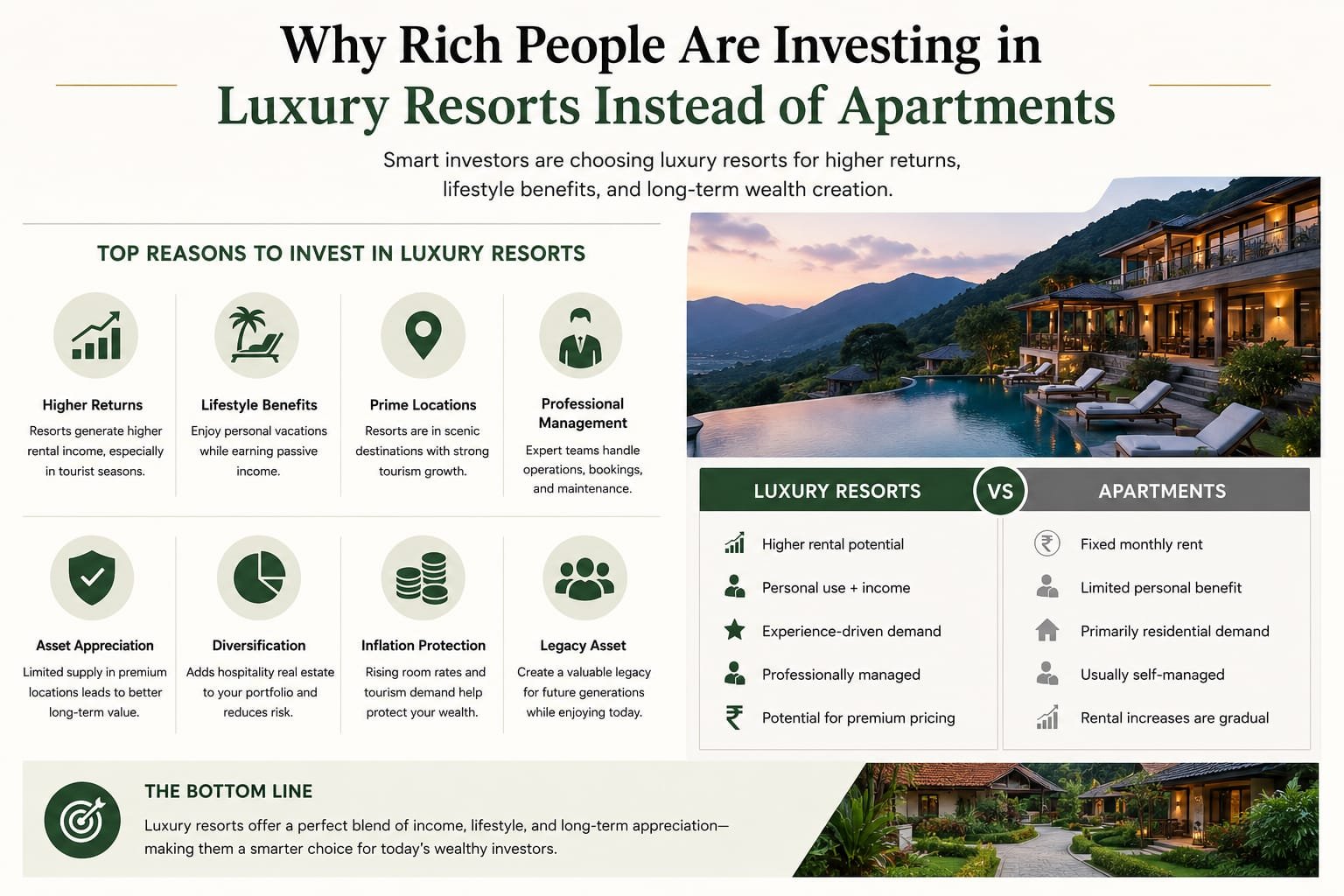
1. Lower Rental Yields
In most major cities, residential apartments generate rental yields of only 2–4% annually. This often falls short of investor expectations, especially when maintenance costs, taxes, and vacancy periods are considered.
2. Market Saturation
Many urban markets are witnessing an oversupply of premium apartments. As inventory increases, capital appreciation slows and rental competition intensifies.
3. Limited Lifestyle Value
Apartments primarily serve as residential assets. They rarely provide the lifestyle experiences that modern affluent investors increasingly seek.
4. Rising Maintenance Responsibilities
Property management, tenant issues, repairs, and upkeep can become time-consuming and reduce the overall attractiveness of apartment investments.
Why Managed Resort Investments Are Gaining Popularity
Managed resort properties offer a unique combination of investment returns and lifestyle benefits.
1. Higher Income Potential
Unlike traditional apartments, resort properties benefit from tourism, business travel, wellness retreats, and short-term rentals.
Because of higher daily rental rates and year-round demand, investors often achieve stronger cash flow and improved occupancy levels.
2. Professional Property Management
One of the biggest advantages is the “hands-free” ownership model.
Professional operators handle:
- Guest bookings
- Marketing
- Housekeeping
- Maintenance
- Customer service
- Revenue management
This allows investors to earn passive income without dealing with operational challenges.
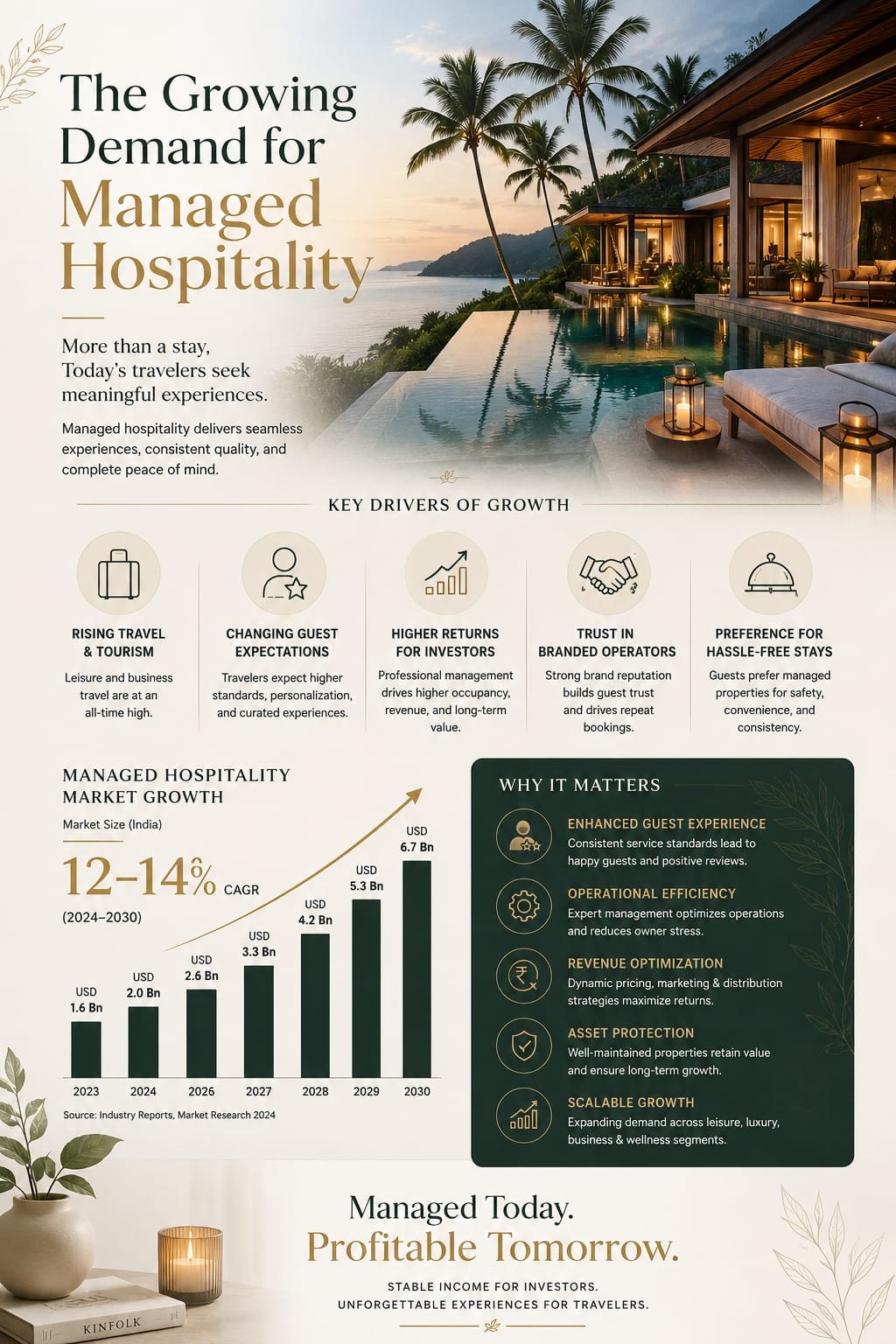
3. Growing Tourism Industry
The global tourism and hospitality sectors continue to expand rapidly.
As domestic travel, luxury tourism, wellness retreats, and work-from-anywhere lifestyles gain popularity, demand for premium resort accommodations is increasing significantly.
This creates long-term opportunities for resort property owners.
4. Diversification Beyond Urban Real Estate
HNIs increasingly recognize the importance of diversifying their portfolios.
Managed resorts provide exposure to:
- Hospitality-driven income
- Tourism growth
- Lifestyle assets
- Vacation property markets
This reduces reliance on conventional urban residential investments.
Lifestyle Meets Investment
Today’s affluent investors want more than financial returns.
Managed resort ownership offers:
- Personal vacation usage
- Exclusive hospitality experiences
- Premium amenities
- Wellness-focused environments
- Family retreat destinations
Investors can enjoy the property while also generating income when it is not being used.
This dual-purpose benefit is a major reason behind the growing popularity of resort investments among HNIs.
The Rise of Branded and Managed Resorts
A major trend in 2026 is the rise of professionally branded resort developments.
These projects offer:
- International hospitality standards
- Strong brand credibility
- Better guest occupancy
- Premium pricing power
- Enhanced resale value
For investors, brand-backed management reduces operational risk while increasing income potential.
Technology Is Making Resort Investments Smarter
Artificial intelligence and advanced property technology are transforming resort management.
Modern operators now use:
- Dynamic pricing systems
- AI-driven occupancy forecasting
- Digital guest experiences
- Automated booking platforms
- Data-driven revenue optimization
These technologies help maximize returns while improving operational efficiency.
Sustainability Is Influencing Investment Decisions
HNIs are increasingly prioritizing environmentally responsible investments.
Modern resort developments are integrating:
- Renewable energy solutions
- Water conservation systems
- Eco-friendly construction
- Wellness-focused design
- Sustainable tourism practices
These features not only appeal to travelers but also enhance long-term asset value.
Why 2026 Is a Turning Point
Several factors are converging simultaneously:
- Increasing wealth among HNIs
- Growing travel demand
- Remote work flexibility
- Desire for passive income
- Focus on lifestyle assets
- Need for portfolio diversification
- Technology-enabled management models
Together, these factors are accelerating the shift away from traditional apartment investments and toward managed resort ownership.
The Future of HNI Real Estate Investing
The modern HNI is no longer investing solely for appreciation. They are investing for income, experiences, diversification, and legacy.
Managed resort investments successfully combine all four objectives:
✔ Consistent income potential
✔ Professional management
✔ Premium lifestyle benefits
✔ Long-term wealth creation
✔ Portfolio diversification
As we move further into 2026, managed resorts are expected to become one of the most sought-after real estate asset classes for sophisticated investors seeking both financial performance and lifestyle value.
Conclusion
The shift from apartments to managed resort investments represents a broader transformation in how HNIs view wealth creation. Investors are moving beyond traditional ownership models and embracing assets that deliver returns, experiences, and convenience simultaneously.
Why HNIs Are Shifting from Apartments to Managed Resort Investments in 2026
The New Era of Wealth Creation
For years, luxury apartments in metro cities were considered the preferred real estate investment for High Net-Worth Individuals (HNIs). They offered status, stability, and the perception of long-term appreciation. However, 2026 is witnessing a significant change in investor behavior.
Today’s HNIs are no longer looking at real estate merely as an asset to own—they are looking for assets that generate income, offer lifestyle benefits, and create long-term wealth efficiently. As a result, managed resort investments are emerging as one of the most attractive alternatives to traditional apartment ownership.
The shift is not just a trend; it reflects changing investor priorities, evolving consumer preferences, and the growing demand for experiential real estate.